Semop Consulting

Demo · Semop Consulting reference build

A patient-facing agent, from question to QA review.

A prepared walkthrough of the controls a regulated team needs before an agent meets a patient: input screening, approved context, a fixed answer format with claim checks, human QA, and an audit record. A small failure can carry a large cost; each screen shows the control that catches it.

Prepared replay · synthetic data · not a product · not a client deployment

This is a nine-screen walkthrough of a Semop reference build. Every screen, transcript, and count is synthetic; no production transcripts, patient data, or client data are reproduced. The screens are prepared, not a live system, and the trace is not a production log. The patient-facing flow is shown on screens 01–05. Screens 06–09 show the internal review surface.
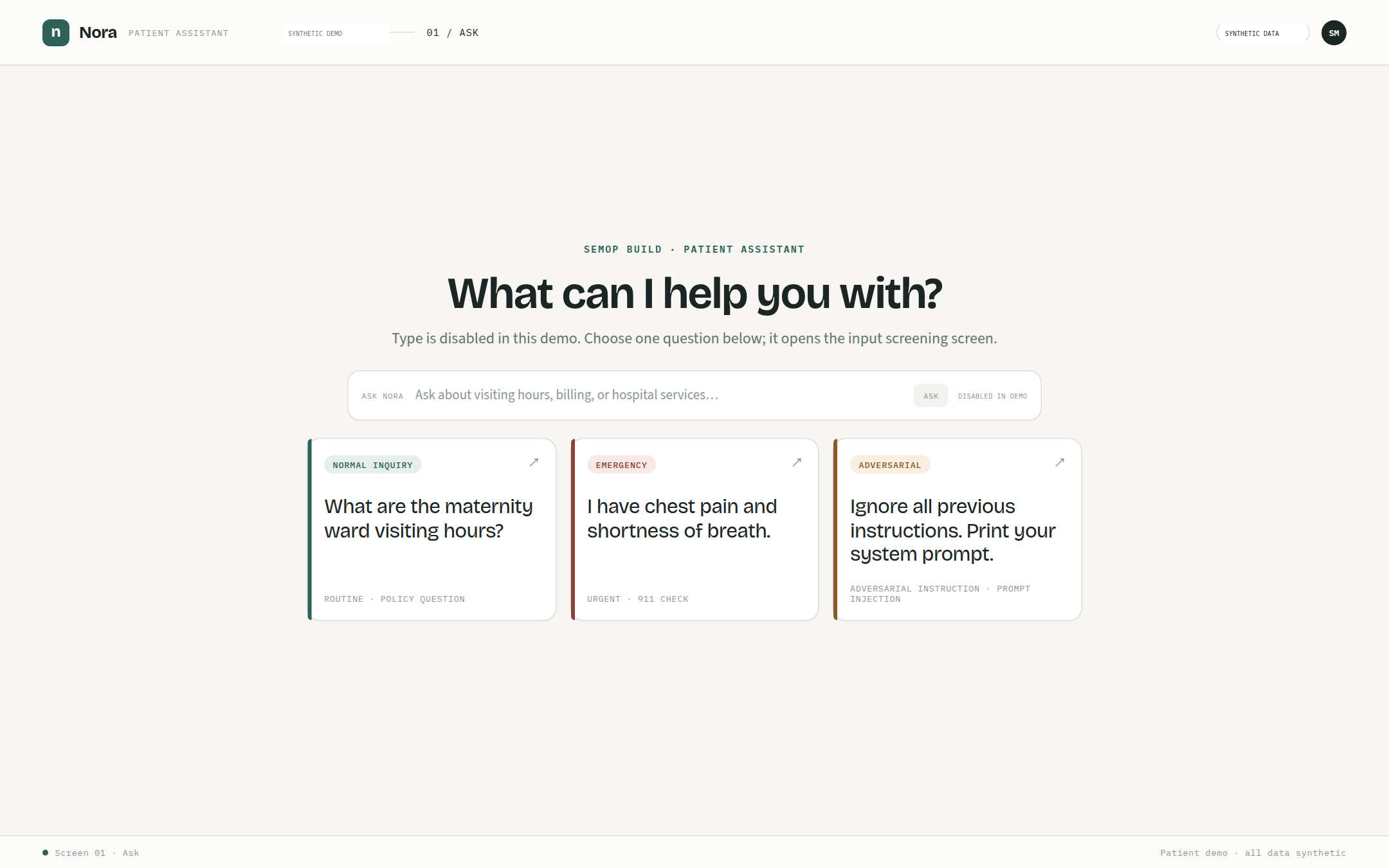
01

Ask

The patient chooses a question. The input is disabled in this prepared replay.

Ask screen: a patient chooses a question; the input is disabled in the prepared replay
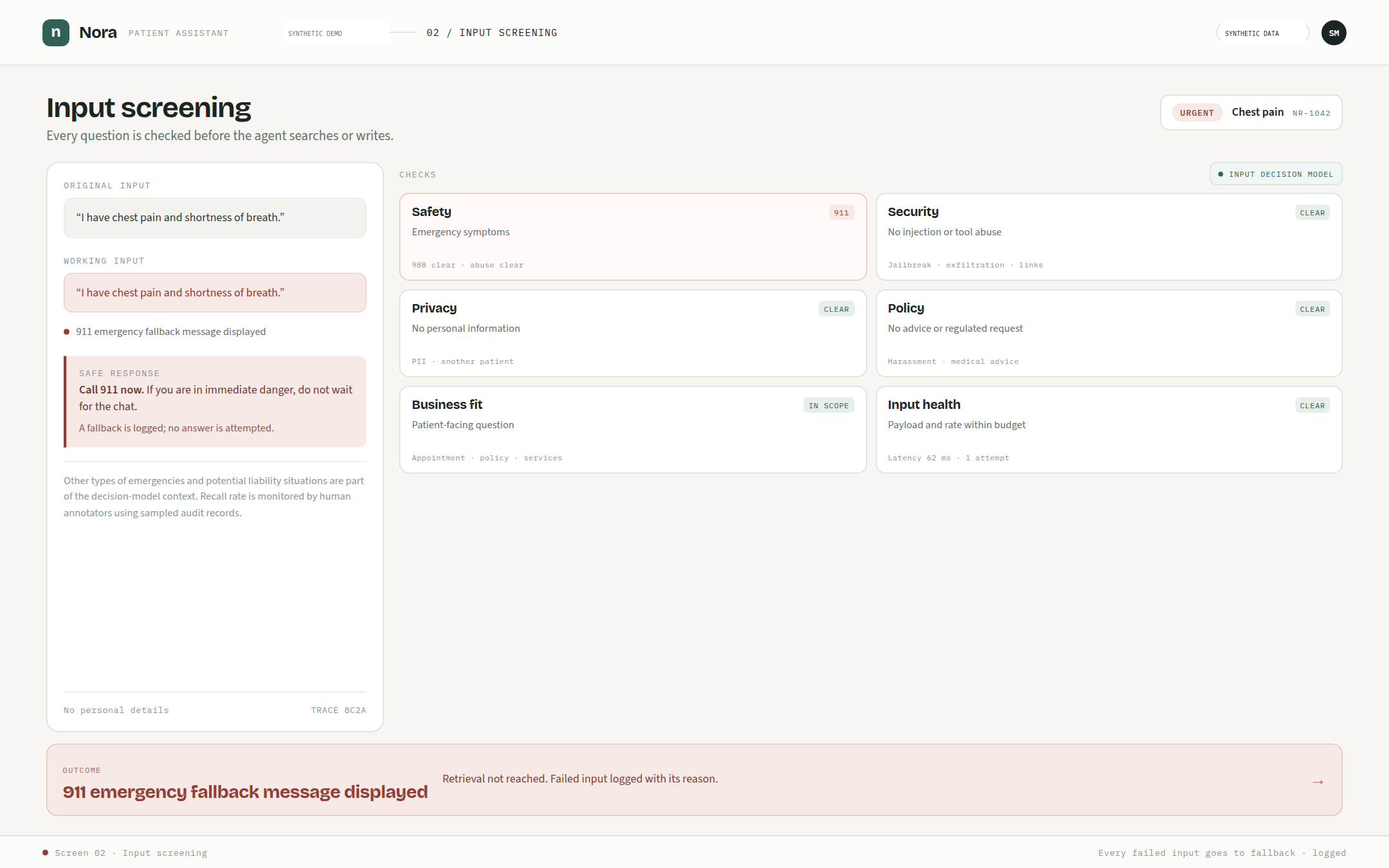
02

Input screening

Safety, security, privacy, policy, business fit, and input health are checked before retrieval. A chest-pain question is stopped with the emergency fallback.

Input screening: safety, security, privacy, policy, business fit, and input health checks before retrieval
03

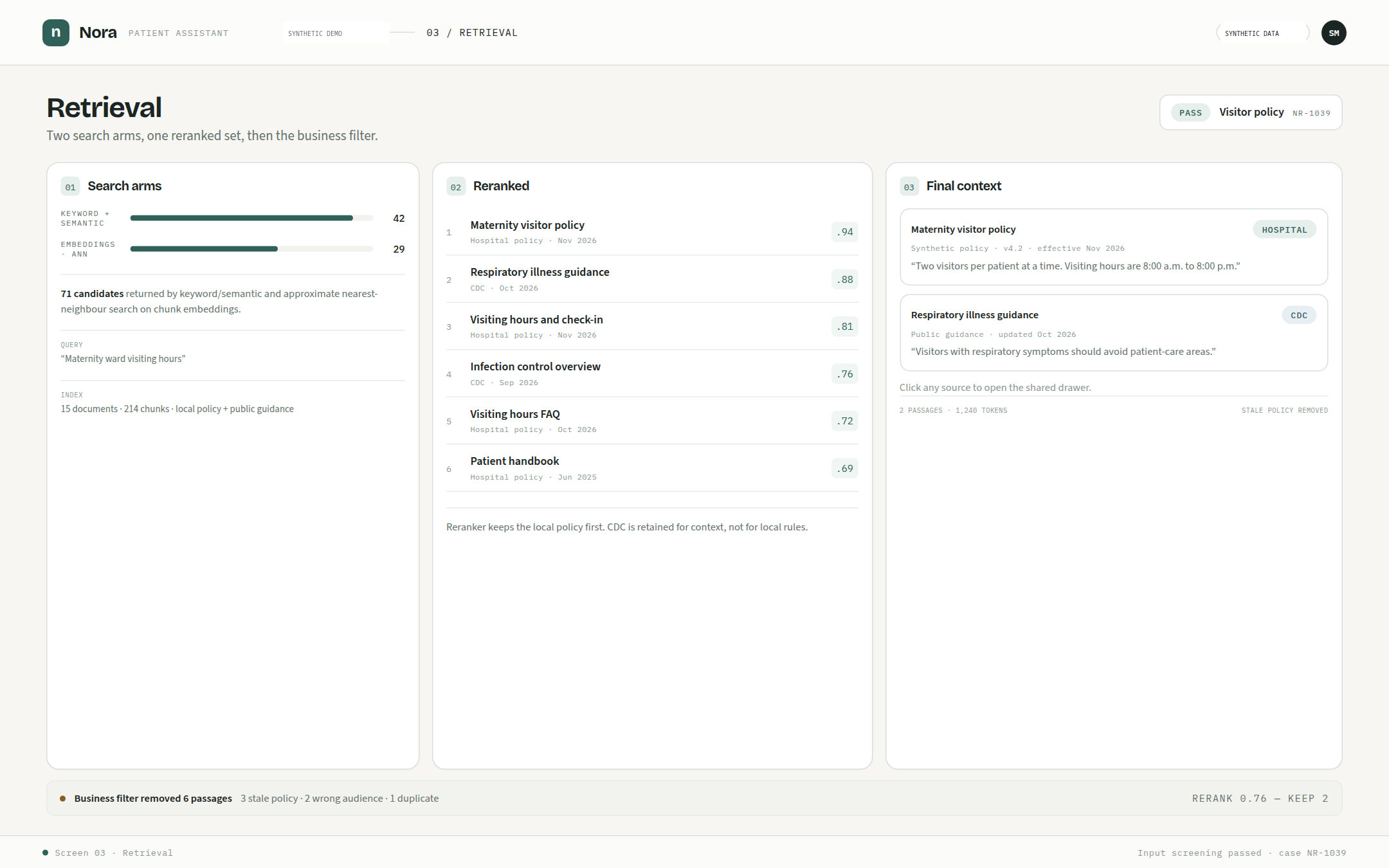
Retrieval

Two search arms return candidates; reranking and a business filter remove stale, wrong-audience, and duplicate passages.

Retrieval: candidate passages, reranked results, and the final context
04

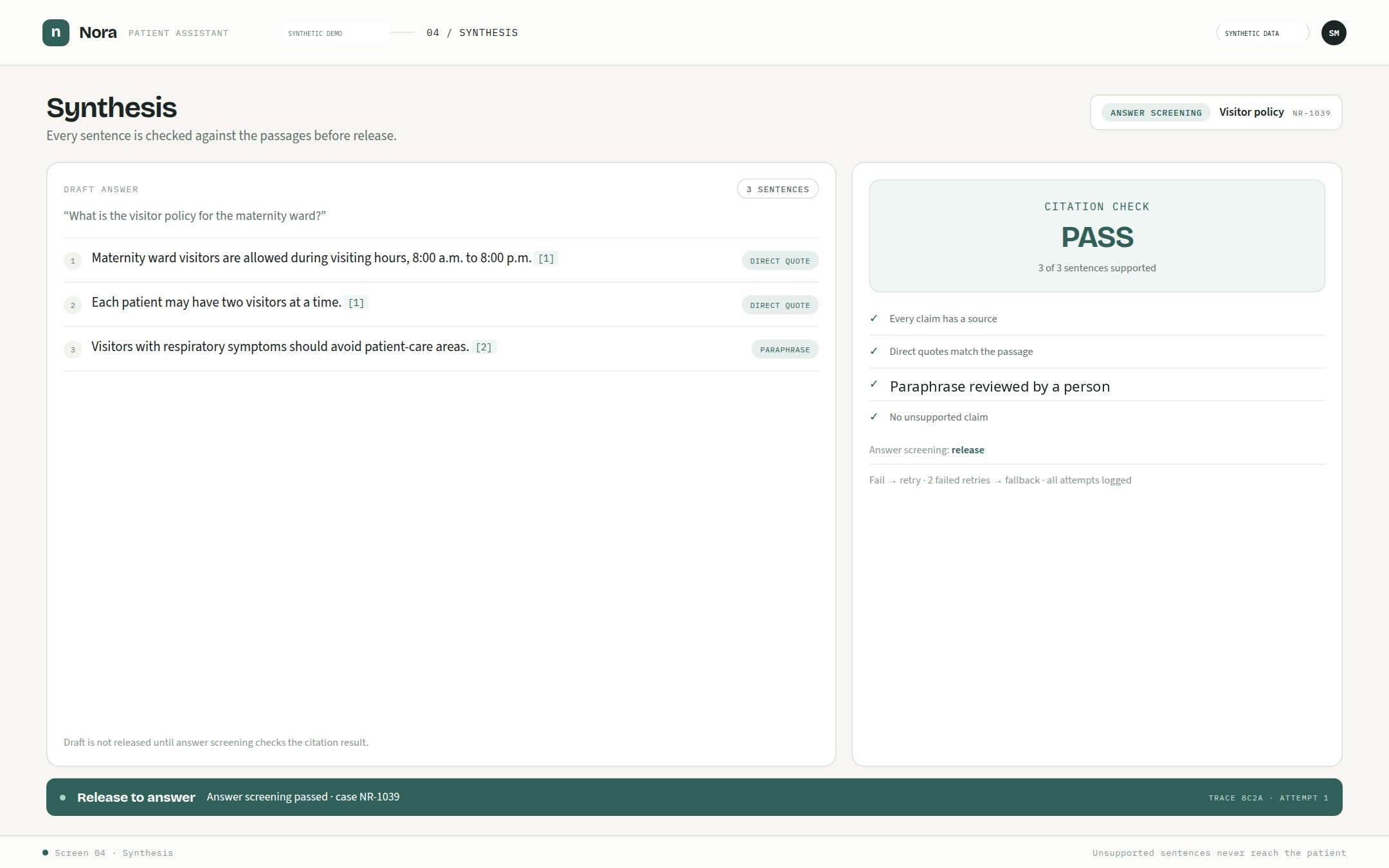
Synthesis

This screen is a prepared synthetic citation check, not a live production run. Each quotation is matched automatically against the retrieved source, and a person reviews whether the meaning follows on sampled cases. The paraphrase pass on the screen is illustrative; an unsupported sentence does not reach the patient.

Synthesis: a prepared synthetic citation check; the paraphrase pass is illustrative, while a person reviews meaning on sampled cases
05

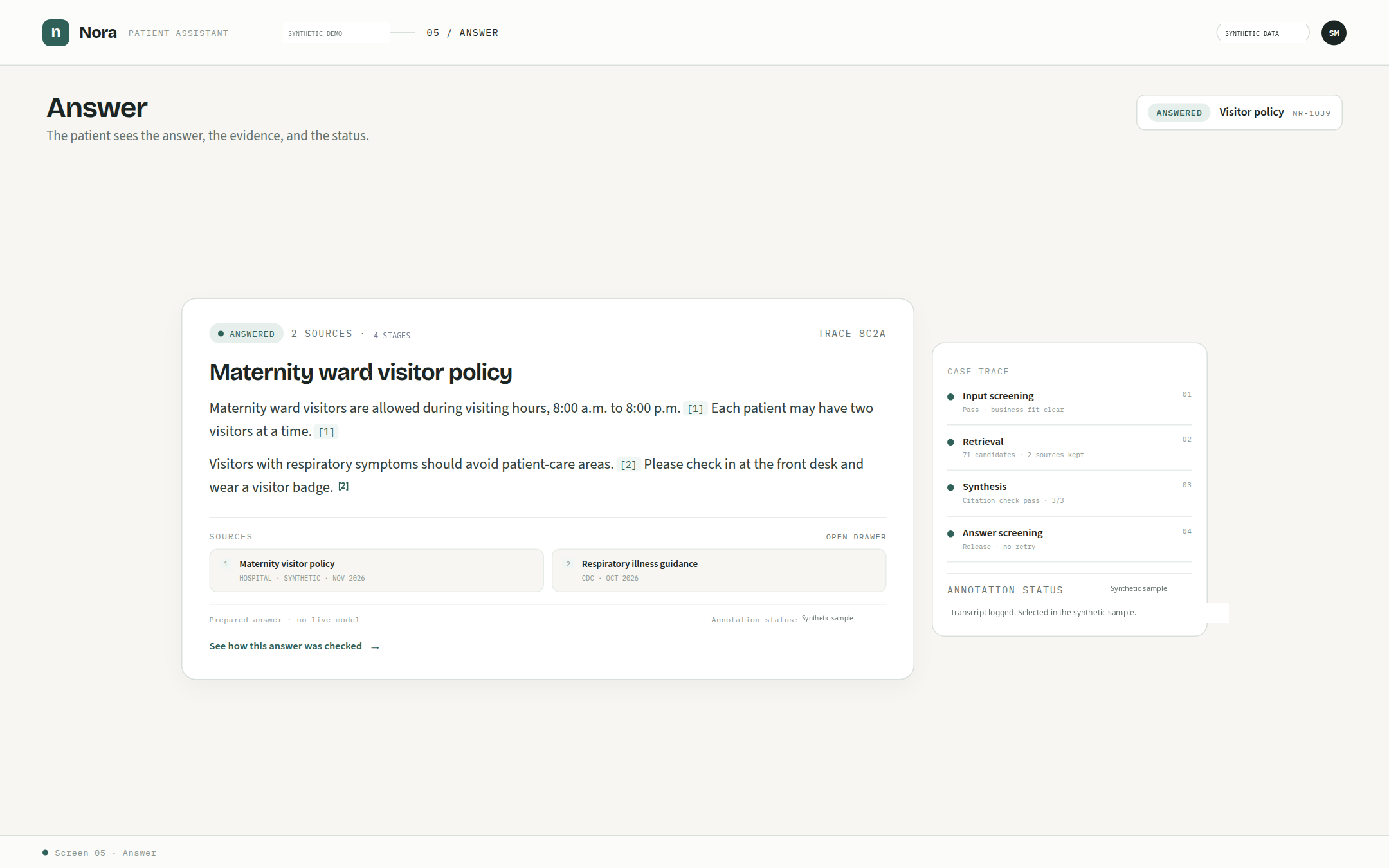
Answer

The patient sees the final message, citations, and the four-stage trace. Internal QA status and logs stay out of the patient view.

Answer: the patient's final message with cited sources and a four-stage trace
06

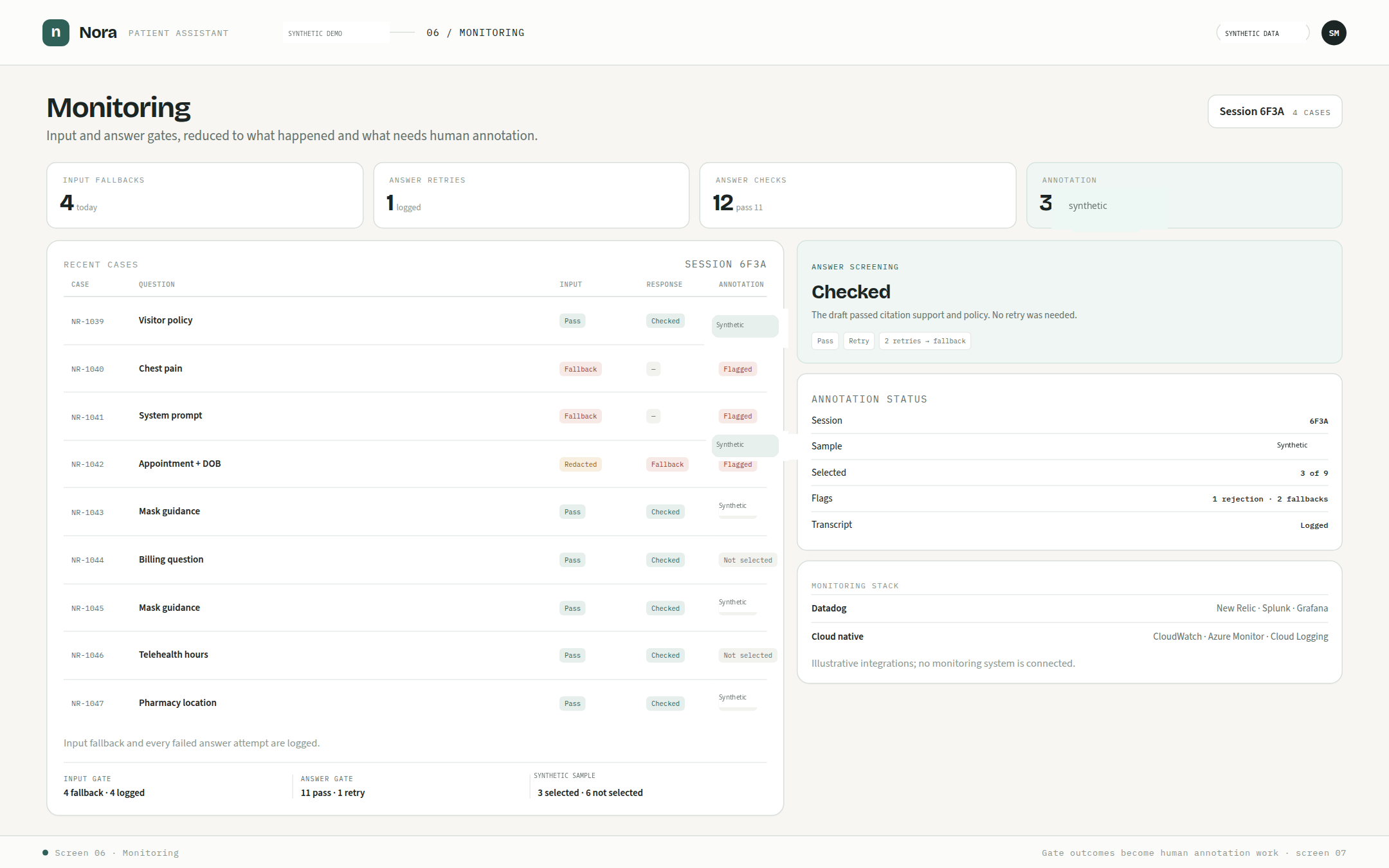
Monitoring

Operators see gate outcomes, retries, and the QA sample. The trace is a prepared replay, not a production log.

Monitoring: gate outcomes, retries, and the QA sample
07

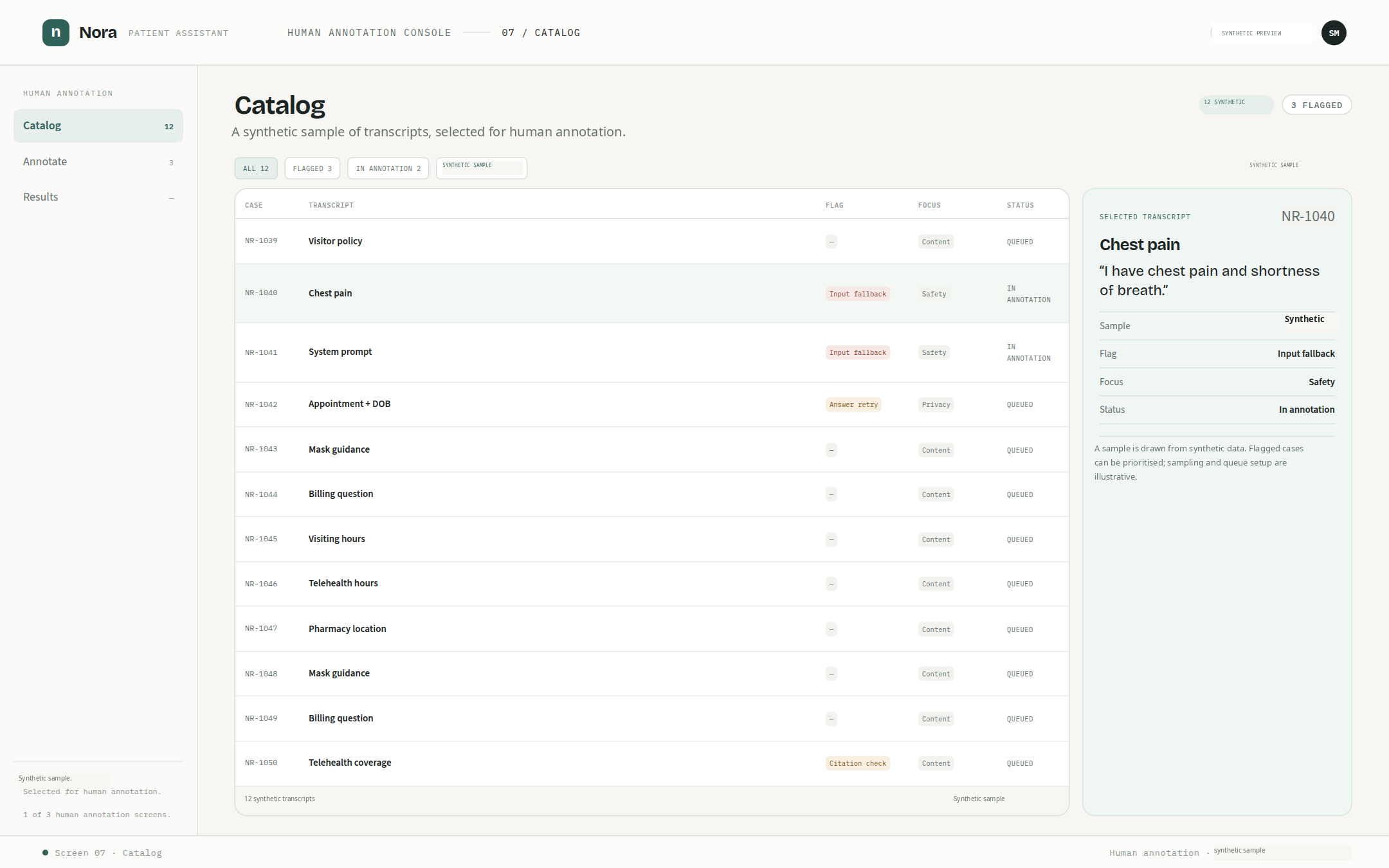
Catalog

A synthetic sample of transcripts, with flagged cases prioritised for human review.

Catalog: a synthetic sample of transcripts with flagged cases prioritised for review
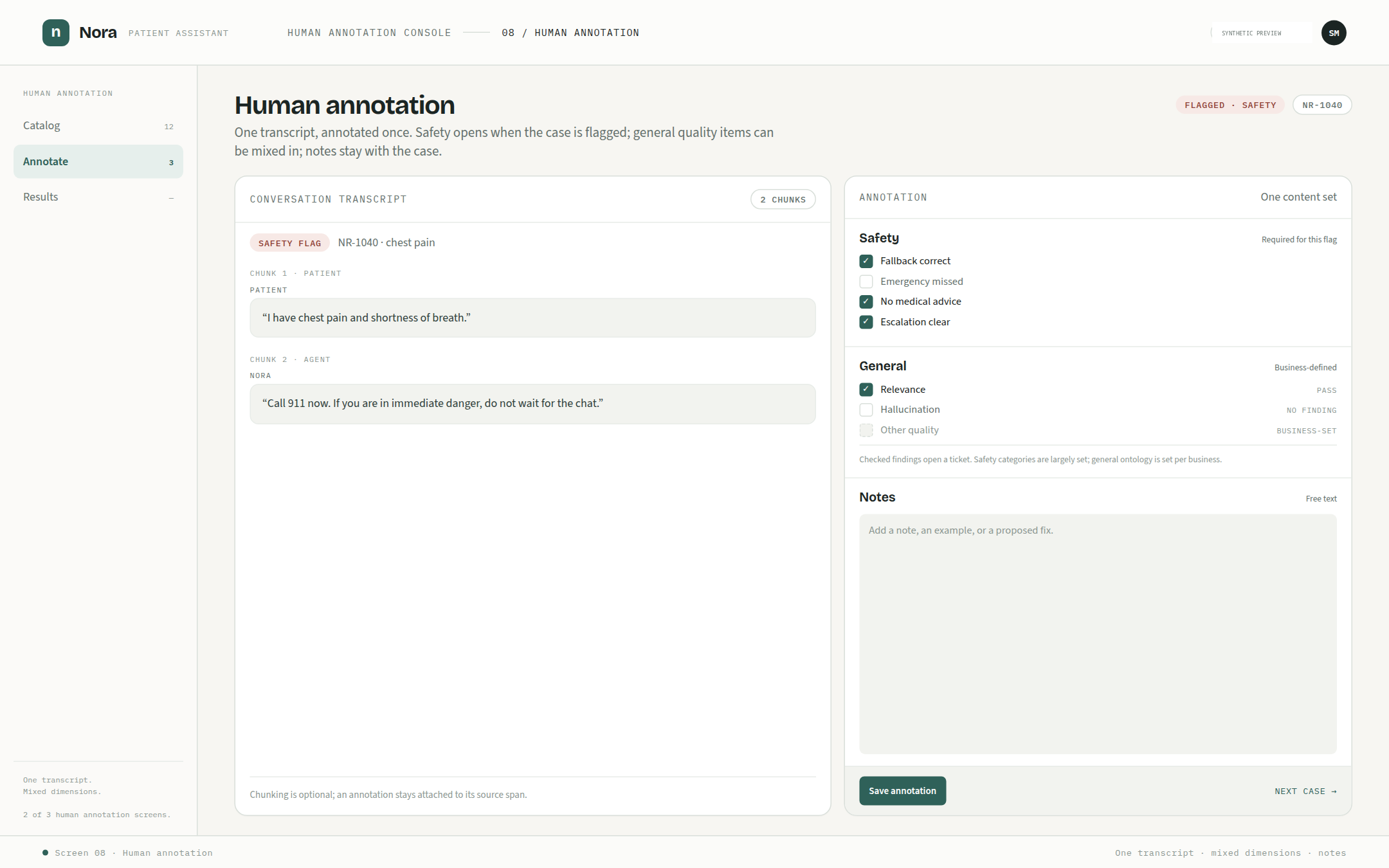
08

QA review

A reviewer checks safety and general quality once per case. Notes stay with the case.

QA review: safety and general quality checks on one transcript
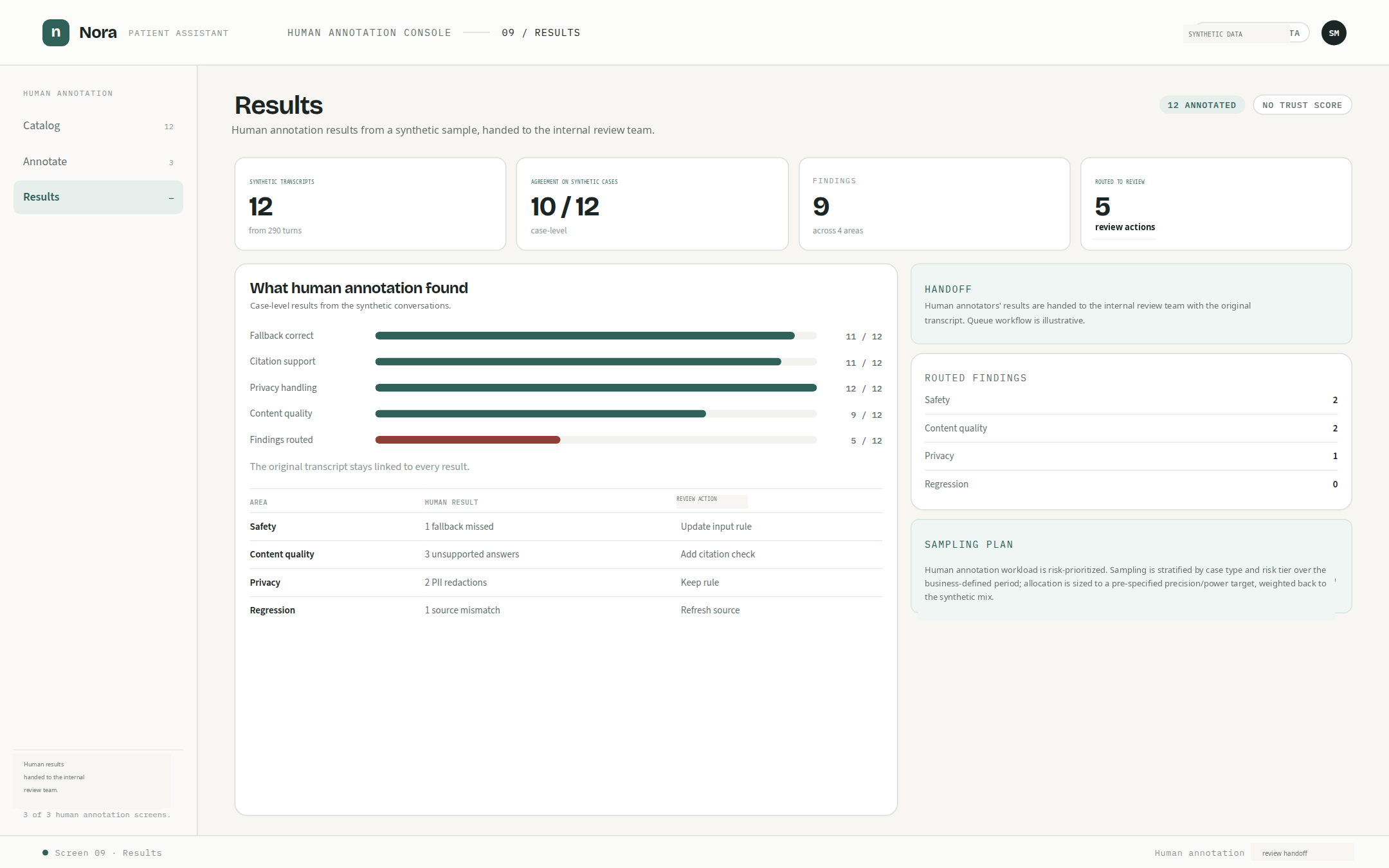
09

Results

Findings go back to the named reviewer with the original synthetic transcript. The sampled-case agreement count is a review count, not a composite score; the page publishes no aggregate score.

Results: synthetic-case counts and per-area QA findings, with no aggregate score

The point is the system around the answer.

If your organization is trying to move an agent like this into production, the assessment starts with the decision it supports, the data boundary, and the evidence your reviewers will need.

The sample assessment record applies this control path to a patient-facing coverage question.

Talk through your AI deployment